FreeOngoing
Exhibition
Immersive Media Art Experience Renewal
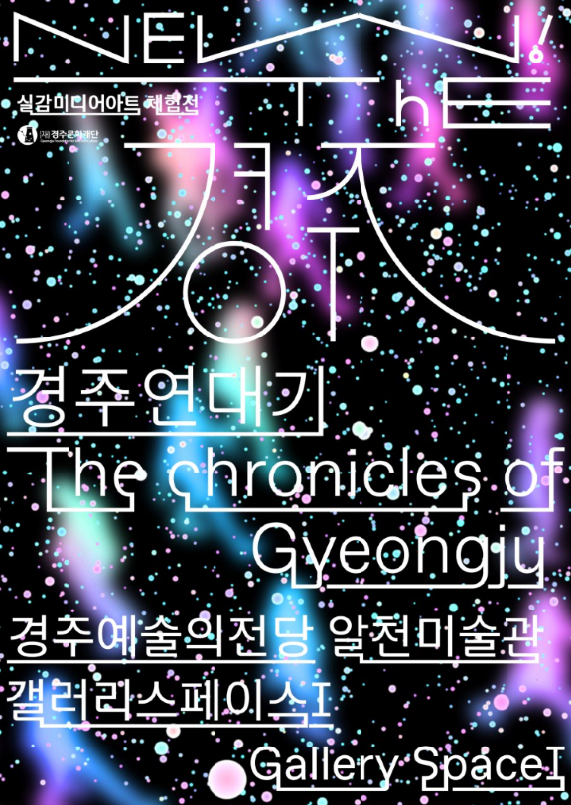
NEW! The Gyeongju; Gyeongju Chronicle
Gyeongju-si·Gyeongju Arts Center Alcheon Museum

Free · Gyeongju-si National Gyeongju Museum
In 1937, a broken monument fragment was discovered west of Gyeongju Wolseong. From this fragment, only the character ‘存’ (jon) could be confirmed, and the rest was severely damaged, making it difficult to know the exact contents of the monument. In 2020, while excavating the moat surrounding Gyeongju Wolseong, the National Gyeongju Research Institute of Cultural Heritage brought another monument fragment into the world. This fragment was slightly larger than the one kept in the museum, and characters such as ‘貢’ (gong), ‘白’ (baek), ‘不’ (bul), and ‘天’ (cheon) could be confirmed. At first, no one expected that the two fragments had broken off from the same monument. During the 3D scan inspection of the monument, the fracture surfaces of the two stones matched precisely, and the characters that remained only in halves were revealed to be ‘稱’ (ching). Of course, it is still unknown what contents this monument contained, who erected it, for what purpose, or where. This is because the remaining information is very limited. Will we be able to meet other fragments as time passes? Mystery of the Wolseong Monument Where did the stone come from? Both monument fragments are alkali granite containing quartz, feldspar, and biotite, and provenance analysis revealed that they were quarried around Namsan, Gyeongju. The reason why the colors of the two fragments are currently different is likely because the monument fragment recovered in 2020 was buried underground, whereas the fragment discovered in 1937 was recovered from the surface and thus exposed outside the ground for quite a long time. Which part of the monument is it? Judging by the arrangement of the characters remaining on the monument fragment, these fragments correspond to the central part rather than the edges of the monument. This is because traces of additional characters are confirmed to the left, right, top, and bottom of the currently remaining characters. The front side where the characters are written is smoothly polished, and a total of sixteen characters are confirmed. Among them, seven characters can be read, four characters can be guessed, and five characters cannot be confirmed. The secret of the typeface The typeface engraved on the monument is not the regular script (Haeseo-che)* commonly confirmed in Silla monuments, but the clerical script (Leseo-che)*. This differs from the fact that 6th-century Silla monuments, including the Pohang Jungseong-ri Monument (503 AD) known as the earliest Silla monument, used regular script influenced by the clerical script. This is why the discovery of a monument fragment using only the clerical script is interesting. *Haeseo-che – A Chinese character typeface written straight in regular script without flowing strokes. In other words, it is a typeface composed of methods of drawing 8 strokes such as dots, horizontal strokes, vertical strokes, hooks, right-slanting strokes, long left-slanting strokes, short left-slanting strokes, and falling strokes. *Leseo-che – A typeface made simpler and more convenient for daily use than the Jeonseo-che used during the Warring States period of China, characterized by somewhat wide and flat characters. Silla monument or Goguryeo monument? Clerical script is mainly confirmed in Goguryeo monuments, and coincidentally, the characters ‘渡’ (do), ‘白’ (baek), ‘稱’ (ching), and ‘貢’ (gong) used on the Gwanggaeto Stele are also confirmed in this monument fragment. This raised a connection with Goguryeo in the 5th century. On the other hand, there are cautious opinions pointing out that the Wolseong monument used granite quarried from Namsan in Gyeongju, that clerical script was also used in China making it difficult to judge the production period or country by typeface alone, and that sophisticated surface processing methods began to appear in earnest after unification in the 7th century. As such, it is still difficult to grasp the entire contents of the monument, so more discussion and debate are needed to determine whether it is a Silla monument or a Goguryeo monument.
Gyeongju-si National Gyeongju Museum
Get directions on Kakao MapNo reviews yet. Be the first to leave one.
Please write at least 10 characters. Posts containing ads or links are rejected, and posts that breach the content policy may be hidden after being reported.
Immersive Media Art Experience Renewal
Gyeongju-si·Gyeongju Arts Center Alcheon Museum
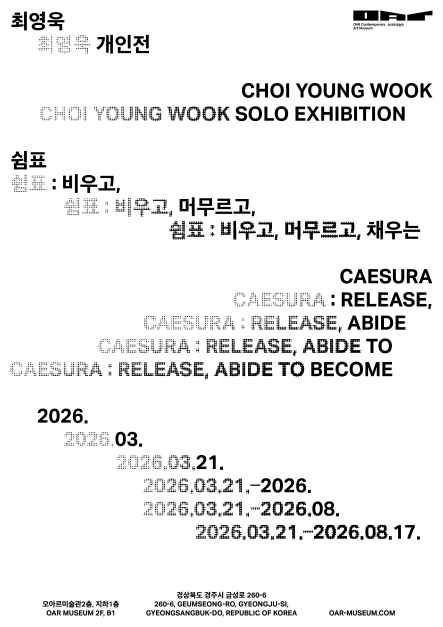
Gyeongju-si·OAR Museum of Art

Gyeongju-si·National Gyeongju Museum

Gyeongju-si·National Gyeongju Museum
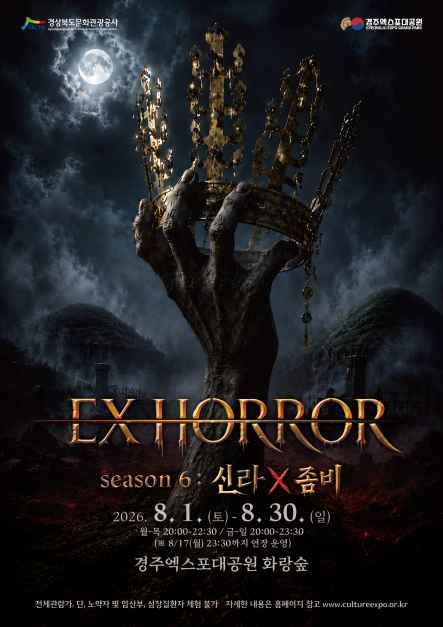
Gyeongju-si·Hwarang Forest (Lumina Night), Gyeongju Expo Grand Park
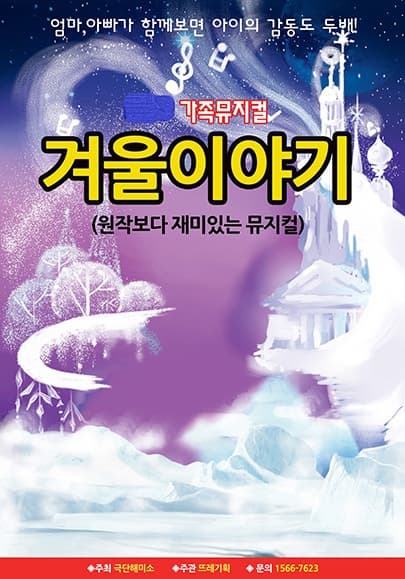
Gyeongju
Gyeongju-si·Seorabeol Cultural Center
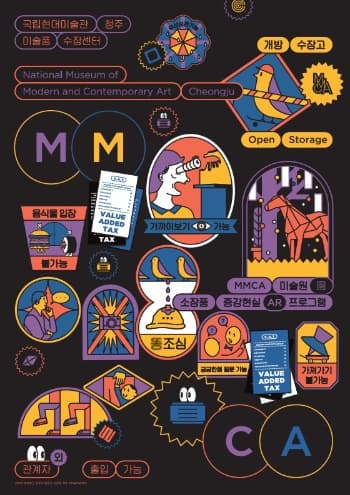
Cheongju-si·National Museum of Modern and Contemporary Art, Cheongju (MMCA Cheongju)

Seoul Grand Park

National Museum of Korea
Yongsan-gu·National Museum of Korea Permanent Exhibition Hall Ancient Greece and Rome Gallery
Saha-gu·Museum of Contemporary Art Busan
Haeundae-gu·Busan Museum of Art

Yeongdeungpo-gu·East Lobby, 1F, 63 Building, Yeouido
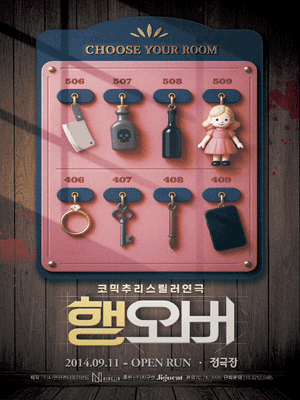
Jongno-gu·Jeong Theater (formerly M Theater, formerly Harmony Art Hall)
![Poster for Shear Madness [Daehangno]](https://www.kopis.or.kr/upload/pfmPoster/PF_PF241378_260618_130555.gif)
Jongno-gu·Contents Box (formerly Lemaire Theater)
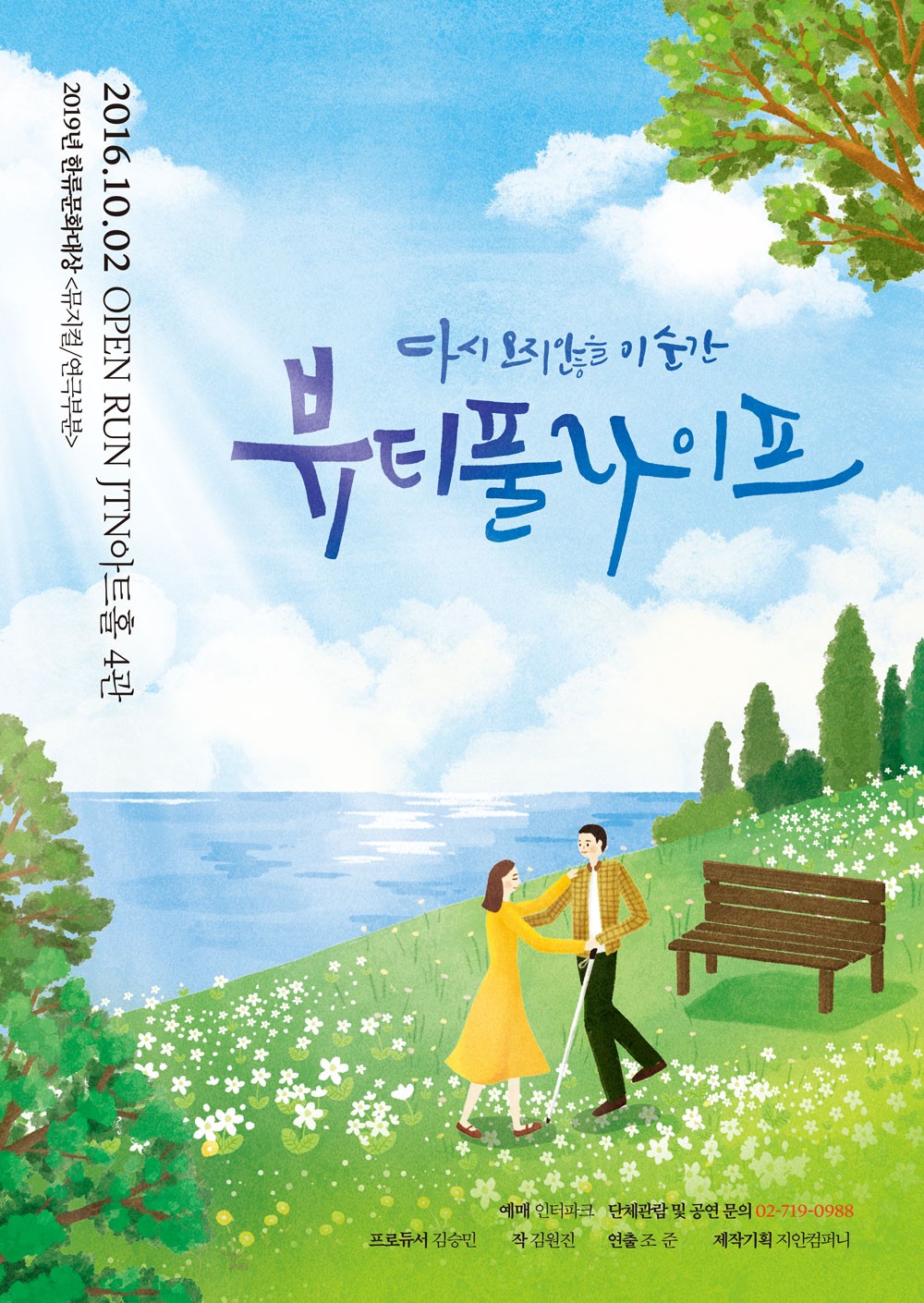
Jongno-gu·JTN Art Hall (formerly Daehangno Arts Madang)

Jongno-gu·Parang Theater (formerly Dohyang Art Hall, formerly Mudis Hall)
![Poster for Watch Out, Little Red Riding Hood! [Cheongju, Sejong]](https://www.kopis.or.kr/upload/pfmPoster/PF_PF150471_200629_135159.gif)
Cheongju-si·Soenaegol Small Theater
![Poster for The Cooking Magician [Daehangno]](https://www.kopis.or.kr/upload/pfmPoster/PF_PF151901_241219_103733.gif)
Jongno-gu·Delicious Theater