
PaidOngoing
Performance
Raum Matinée Concert
Gangnam-gu·Social Venue Raum
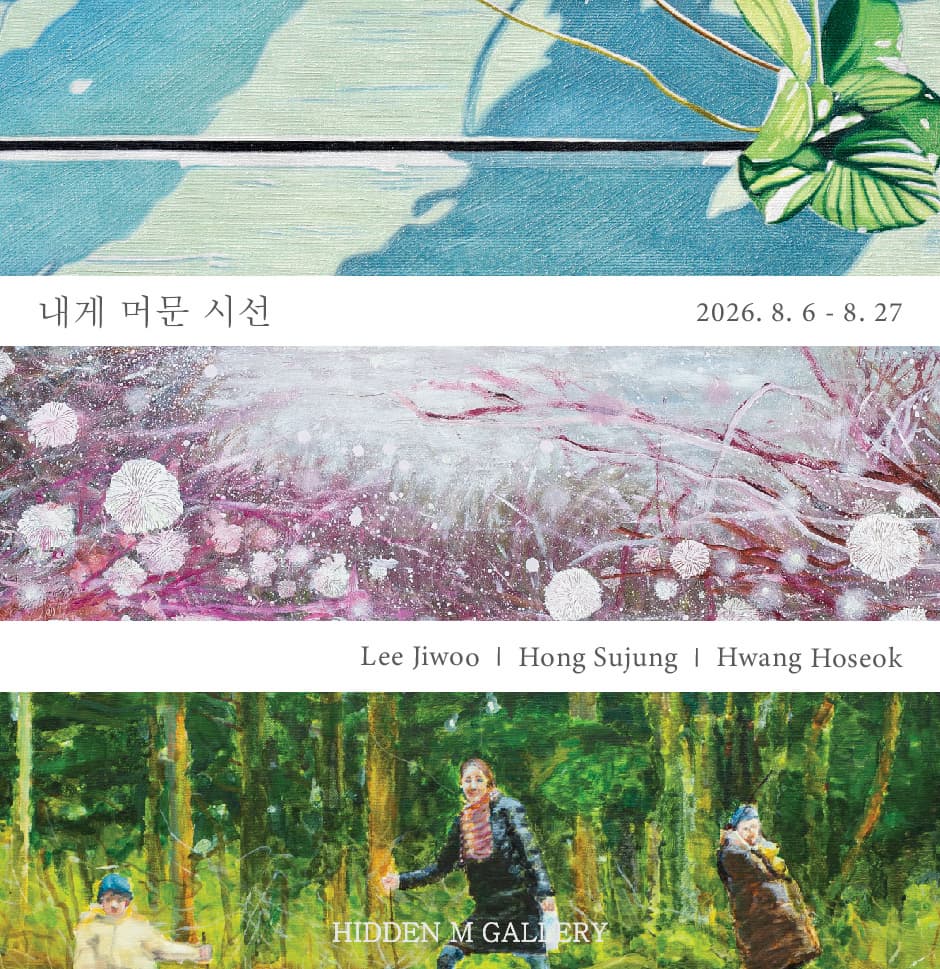
Free · Gangnam-gu Hidden M Gallery
Hidden M Gallery will hold a three-person exhibition, 'The Gaze That Stayed on Me', featuring artists Lee Ji-woo, Hong Su-jung, and Hwang Ho-seok from August 6 to August 27. This exhibition highlights what it means to look at a single subject for a long time, and how that gaze forms senses and memories to build a new world within the language of painting. Although the three artists look at different subjects—landscapes, life, and daily life—their works do not stop at reproducing the visible world. Rather, they pile up emotions, time, and traces of existence that are revealed where the gaze lingered on the screen, making us perceive the familiar world anew. We live looking at countless scenes a day. However, not all landscapes remain with the same depth inside us. Some scenes pass by, but others stay in our minds for a long time and become part of our lives. This is not because of the visible shapes, but because the light, air, emotions, time, and difficult-to-explain senses of that moment accumulate together. Gaze does not stop at the act of looking at a subject. Some senses lead the gaze, and some scenes remain as a single memory and emotion after lingering for a long time. What we keep in our hearts might be a world newly formed in the time the gaze stayed, rather than the landscape that flashed before our eyes. 'The Gaze That Stayed on Me' focuses on this persistence of gaze. Painting is not a medium that transfers reality in front of the eyes as it is, but a language that rebuilds the time and emotions through which the gaze passed. The colors, lines, textures, and traces left on the screen are not simple expressions but the result of accumulated time of looking, and the relationship the artist has formed with the world is fully embedded inside. Although the three artists use different plastic languages, they all bring back the senses that lingered on them for a long time into the present through painting. Rather than explaining a scene, their works show the depth of sensation that continues to remain even after the gaze has passed. Lee Ji-woo's paintings start from the process of re-reading the senses of a lingering day, rather than starting at the moment of looking at a landscape. However, what the artist captures on the screen is not the shape of a specific place or landscape. Daily scenes such as a book read yesterday at the bedside, a chair at noon, a door engraved with blue patterns in summer light, a window on a summer evening, a lemon beside a script book between one and ten o'clock, and cloud shadows and candle wax remain as a single sense and memory through a long-stayed gaze. A landscape gazed at for a long time begins to take on an expression like a face at some point, and the artist calls that subtle sign of emotion 'facial color' (낯빛). Emotions such as loneliness, excitement, and affection are condensed into layers of light and color to remain in memory, and are revealed again as an expression on the screen. The landscape is no longer an external object, but a point of contact between oneself and the world. The artist reveals the process of daily senses accumulating with physical properties, stacking coarse-grained pigments, oil, and paint on top. Some stay on the screen, while others brush past, leaving grooves and traces. The thickness and density of those irregularities become a layer created by the accumulation of past time and memories. In the process of stacking and erasing, layers are formed like a memory, and the traces left by pressure and friction create the texture of emotion. This repetition is not a simple plastic effect, but resembles the structure of time in which the unrecorded senses of a day accumulate and transform. Rather than recording the artist's special events, it is a process of re-reading a day that was too close and easily passed by. Senses not written in diaries and not spoken in words stack layer upon layer on the screen to become a landscape. The 'facial color' formed in this way is not a portrait of a specific person, but another portrait where the world met through the landscape and one's inner self intersect. The artist's gaze does not stop at looking at the landscape, but reads the emotions of existence embedded in it, leading us to look at the world a little deeper as well. Hong Su-jung views life as a huge cycle that constantly repeats generation and extinction. The beautiful color planes unfolded on the screen are not completed shapes, but are like thin membranes temporarily wrapping the energy of life constantly surging beneath. The artist first leaves a red acrylic layer on the screen. It is the primitive pulse of life and the trace of energy boiling deep inside human nature. Afterward, she covers it thickly with oil paint of calm tones to temporarily hide the primitive energy of life. However, the energy latent beneath the screen does not disappear, waiting for the moment to reveal itself again. Before the oil paint hardens, the artist carves and scrapes the screen with a needle. This act is not a simple plastic technique, but a gesture to reveal the hidden life force back to the world, and a healing process of facing wounds head-on without evading them. Through the gaps opened by scraping, the red color layer begins to breathe again, and the screen finally gains breath. Afterward, the countlessly overlapping fine lines create a new flow of life rather than filling the wounds left by the needle. The huge density formed by rough and delicate lines organically entangling resembles the waves of the universe, showing the cycle in which life endlessly generates and recovers. Hong Su-jung's paintings reveal the senses and energy before being shaped, and the invisible flow of life on the screen. The artist's gaze expands beyond looking at the subject to detecting the latent movement and power of existence. Her painting becomes a field to record the time when life blossoms again, rather than a space to hide wounds. Hwang Ho-seok gazes for a long time at daily life, which is closest and easily passed by. Family and friends, repeated days, and familiar times commuting between the studio and home seem to flow without special events, but they transform into the most precious records of life within the artist's gaze. In an era where numerous images are consumed rapidly, we face countless scenes a day, but most disappear without being remembered. The artist selects the scenes that remained in his heart for a long time among these disappearing moments, and looks at the time and emotions they have within painting again. Scenes recorded with photographs slowly gain breath again through painting. Rather than specific events, the air, emotions, and temperature of relationships of that moment are embedded in the screen. A day that passed like nothing gains a new density of time through painting, and ordinary objects and landscapes take their place as important memories constituting life. What the artist wants to hold onto is not special moments, but things that were too close to be seen. His work shows how familiar daily scenes remain in our memory and persist as a single image even after time passes. His gaze does not make familiar daily scenes strange, but rediscovers the preciousness hidden inside familiarity. Thus, it becomes a memory device that returns the fading senses of life to the present, rather than a medium to record lost time. The three artists look at different worlds, but their gazes ultimately meet at one point. A long-stayed gaze does not consume the subject. It is a process of looking slowly to understand the world, and discovering the emotions, life, and time hidden within. Lee Ji-woo discovers human expressions in landscapes, Hong Su-jung reveals the breath of life in wounds, and Hwang Ho-seok fishes the deepest meaning of life from ordinary daily life. Their paintings are all results of the world they gazed at for a long time, generated again through time and senses, and are landscapes of senses that finally appear where the gaze stayed. 'The Gaze That Stayed on Me' does not stop at showing the world seen by three artists. This exhibition asks again what we look at and live with, and what stays in us for a long time to become part of our lives. The time spent in front of the works becomes a time to slowly look back on one's own life. The traces of gaze left on the screen by the three artists quietly shake the viewer's memories and senses, leading them to face the passed landscapes, relationships, and daily moments with a new gaze.
Gangnam-gu Hidden M Gallery
Get directions on Kakao MapNo reviews yet. Be the first to leave one.
Please write at least 10 characters. Posts containing ads or links are rejected, and posts that breach the content policy may be hidden after being reported.
Gangnam-gu·Social Venue Raum
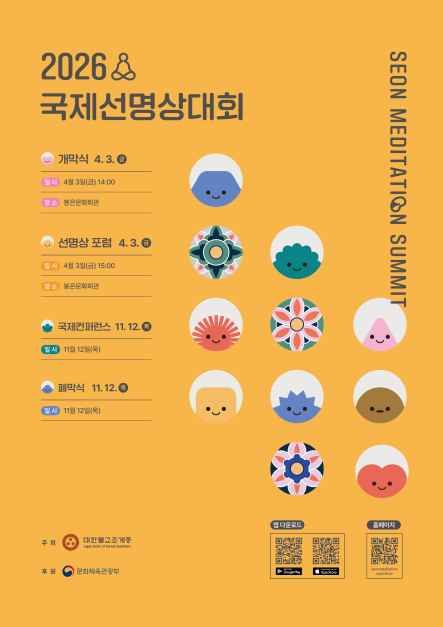
Gangnam-gu·Bongeunsa Temple, Bongeun Cultural Center

Gangnam-gu·Yagi Studio

Gangnam-gu·Kwangya Art Center
![Poster for 2026 2nd Round [Nonhyeon Global Lifelong Learning Center] Learner Recruitment](/img/5fb75ac9c18ffaa7-card.webp)
Gangnam-gu·Lecture Room, 3rd Floor, Nonhyeon Global Lifelong Learning Center
![Poster for 2026 National Intangible Heritage Center 12 Workshops Joint Exhibition [Gong-Dream]](/img/c05f88d1fd003e5a-card.webp)
Gangnam-gu·Exhibition Hall "Gyeol", 2nd Floor, National Intangible Heritage Center Educational Building
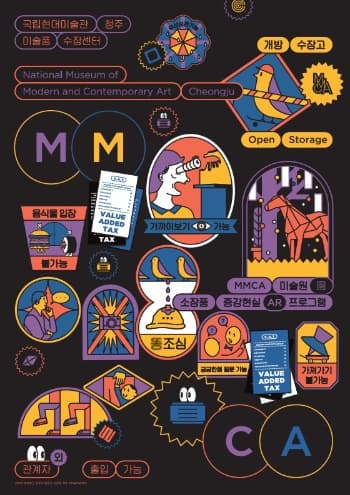
Cheongju-si·National Museum of Modern and Contemporary Art, Cheongju (MMCA Cheongju)

Seoul Grand Park

National Museum of Korea
Yongsan-gu·National Museum of Korea Permanent Exhibition Hall Ancient Greece and Rome Gallery
Saha-gu·Museum of Contemporary Art Busan
Haeundae-gu·Busan Museum of Art

Yeongdeungpo-gu·East Lobby, 1F, 63 Building, Yeouido
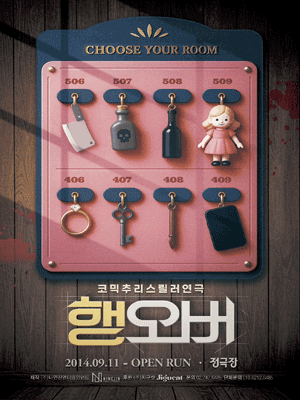
Jongno-gu·Jeong Theater (formerly M Theater, formerly Harmony Art Hall)
![Poster for Shear Madness [Daehangno]](https://www.kopis.or.kr/upload/pfmPoster/PF_PF241378_260618_130555.gif)
Jongno-gu·Contents Box (formerly Lemaire Theater)
Jongno-gu·JTN Art Hall (formerly Daehangno Arts Madang)

Jongno-gu·Parang Theater (formerly Dohyang Art Hall, formerly Mudis Hall)
![Poster for Watch Out, Little Red Riding Hood! [Cheongju, Sejong]](https://www.kopis.or.kr/upload/pfmPoster/PF_PF150471_200629_135159.gif)
Cheongju-si·Soenaegol Small Theater
![Poster for The Cooking Magician [Daehangno]](https://www.kopis.or.kr/upload/pfmPoster/PF_PF151901_241219_103733.gif)
Jongno-gu·Delicious Theater