
PaidOngoing
Performance
Raum Matinee Concert
Gangnam-gu·Social Venue Raum

Free · Gangnam-gu Gallery JJ
A strange nostalgia Gallery JJ hosts an exhibition of artist Kim Young-Hun. Well known for his unique ripple patterns and colors, his painting work opens a new horizon of painting through our senses and perception of the world shaking amidst the paradigm shift of contemporary scientific civilization. It appears as the presence of a non-visible electromagnetic wave world vibrating with energy, and simultaneously as a poetic metaphor for memories and nostalgia of meta space-time. This exhibition, "Kim Young-Hun: Proxima," consists of about 20 works, including a series showing an expanded painting language and new works from his representative series started in 2009. Layers of paint, stains and scratches, and the creation and disappearance of vibrating lines and planes construct beautiful variations resonating back and forth between continuity and discontinuity on the canvas. The strokes crossing the screen with rhythm convey the trembling and movement of the body delicately on one hand, and evoke nostalgic emotions by containing traces of time with layers of different colors revealed through the gaps of color fields that look worn and old. The conflict and harmony created by opposing elements is one of the characteristics of his work. The painting world where the chaos made by the order of lines and noise intersects with the brilliant artificial color of digital is harmoniously beautiful and catches the eye. It sometimes looks like a Virtual-scape or a musical abstraction. The 'Electronic Nostalgia' series, which began with memories in virtual space, has continued to this day by becoming more abstracted into a world of utopian landscapes, geometric pixels, and wave patterns, following the fragmentation and dissolution of shapes due to electronic noise. The 'Frequency' series, focusing more on the material language of painting than the 'noise' element, gives a consistent direction and order of flow, and creates a rhythm with the heavy thickness of paint, that is, the strength of the material. This exhibition, presenting somewhat different new works, highlights the uniqueness of his artistic world while examining the flow and current changes of the two series at the center of Kim Young-Hun's work, and expands this electronic micro-world into the universe. The micro-world and the macro-world, which are ultimately connected as one, lie outside our perception, taking us to a space-time we have never experienced. The exhibition title 'Proxima' is the name of the closest star from our solar system. Although it is Earth's closest neighbor star, it is actually an incredibly distant place that we can never go to or reach, and the star reminds us of the vast space of the universe along with infinite imagination. Starlight comes to us from past time, and we are looking at a star of the long-ago past. The nostalgia of a star-counting night and the scientific universe filled with wave vibrations intersect. Ⅰ. The non-material electronic world consisting of invisible waves or frequencies is replaced with the material language of painting in Kim Young-Hun's work. It can be a digital image or virtual world landscape made of electrons that he sensed and perceived, or a visualization of the light and music sounds surrounding our daily lives, and furthermore, it can be explained as a work that brings invisible worlds like energy and scientific realities that compose all things in the universe into the realm of senses. Electrons are basic elements constituting the world, and their wave patterns are a medium connecting the artist and the world. Soon, his work is nothing other than the dynamic energy of the universe filled with waves. Above all, what is important to the artist is the self-awareness that 'painting is an adventure.' He experiments with and creates a new pictorial language through thorough exploration so that the materials of work themselves, such as brushes, paint, canvas, and knives, remain faithful to their nature. The repetitive stripe elements in the painting generate an abstract language with an electronic feel. This stripe wave consists of strokes where several colors are created continuously as if sliding in a single brushstroke, obtaining the cheerful joy of drawing due to the smooth rhythm and the unique freedom of strokes. These wave patterns work as forms that are constructed and simultaneously dismantled by noise and the clash and cut of opposing colors, establishing a pictorial reality as a dynamic energy field. It converges into the exploration of the infinity of the unseen world between the digital signals 0 and 1, the world where reality and virtuality overlap, and the world of wave interference and generation. The rhythm on the screen evokes the movement and vitality of a constantly changing world, and the noise appearing diversely like stains or color fields causes discontinuity of the world. The artist's nostalgia for the analog, passing through the world of quantum mechanics revealed by modern physics, soon enables contemplation of the essence of the universe and the world made of particles and waves, rather than solid things. Just like the fluidity of modern society that flows and disappears accelerated by digital platforms, and the identity of contemporary people floating without anchoring, the work also vibrates at some point of shaking, shifting, and distorting. His painting work brings the fragmented senses within the illusion of digital that has changed today onto the flat surface of painting, a highly analog medium, awakening them as new senses that have permeated the current generation. Then, why the 'electronic' world for Kim Young-Hun? His accumulated experiences firmly support his deep contemplation of contemporary media technology, the electronic world of analog and digital, and technological civilization, which form the conceptual basis of his current painting work. Digital media has been a familiar medium for the artist for a long time, and he early recognized the rapid changes in electronic technology and the resulting changes in human perception. He attracted anticipation from the art world by winning the Grand Prize with his media installation work (1995) at the JoongAng Fine Arts Competition in 1995. Afterwards, he went to Europe and was noted in France and the UK for his unique installation and video works mainly themed on existential modes of human life until returning in 2009. His experience as a video journalist for several years at that time also allowed him to witness and realize the truth and falsehood of media. His exhibition "Electronic Nostalgia: Broken Dream" (2010) held at the Sungkok Art Museum after returning presented a future nostalgia for rapidly approaching technology, along with video installation works using digital technology and paintings of unique formats and contents produced since 2008. As implied by the subtitle 'Broken Dream,' objects and bodies appear dismantled, and a civilizational-critical perspective on reality, which is subtly manipulated and brainwashed amidst the rapid development of distorted media and cutting-edge communications, was expressed through the works. Behind the sense given by the reality of pictorial materials that his current work is immersed in, thoughts on the ubiquity of media and digital technology, nostalgia for the past, and anxiety about what is to come still remain. Kim Young-Hun, winning the Ha In-doo Art Prize in 2020, is currently active primarily in Seoul, New York, France, and Hong Kong. His works are in the collections of major institutions in Korea and abroad, including the Leeum Museum of Art, Zaha Museum, Sungkok Art Museum, National Museum of Modern and Contemporary Art Art Bank, Kolon Group, and Bank of America. In the exhibition hall, along with his recent formal experiments, the works seem to expand beyond the frame as wave patterns float lightly and slowly fade on a white background. Unlike before, the 'Frequency' series takes on a homogeneous all-over painting aspect of wave patterns, and the shaking of numerous delicate lines achieved by fine brushes along with bright pastel tones fills the screen with clear energy through variations of a constant high frequency. This rings out as a rhythm itself, like the melody of some calm minimalist contemporary music. Meanwhile, 'Electronic Nostalgia' creates beautiful pattern mutations along with square pixel noise that settles on the ground stratum or ripples, like an aerial scene viewed from the sky. The work (2023-2026) shows a contrast between broad brushstrokes and fine brushes, with circle and square shapes on top showing a three-dimensional composition as if floating in space. However, the closer you look at his works, the more the images disappear, and the focus is placed on the thick or thin, transparent or smooth material feel and pictorial senses on the flat surface. The opposing waves and noise are now forming a rhythm and harmonizing together. The artist often mentions ripples, light, music sounds, and the scent of coffee. Technology media, contemporary senses, and pictorial imagination—how are his paintings perceived and experienced? The exhibition expects a new artistic experience of painting with several questions that arise. Based on contemporary senses, it foresees that it will operate at the gap and boundary of things that seem opposing, such as analog and digital, past and future, reality and virtuality, material and non-material, science and nature, romance and anxiety. “We live in constantly fluttering waves. The scanning lines of a CRT TV, the sound grooves carved on a record, wind and ripples, a cello's adagio, warped space and time, the gap between quarks, the vortex of a galaxy, the universe observed by James Webb, life in digital virtual space...” —Artist's Note Ⅱ. The ambivalent thoughts or existential anxiety about technological development and the future that caught attention in the early days of his work seem to have shifted to strange yet familiar memories or nostalgia. Looking back, the paintings of the series (2008-2009) and the series (2010-2013) showed dynamic screens with shapes of mechanical motion like early 20th-century Futurism, and subsequently appeared as if they were virtual landscapes with certain omens, and future landscapes. The series also showed fragmented forms in the beginning, but despite this, the world created with noise dreamed of a brilliant utopia like an Oriental landscape painting, which again converged into an abstract world where variations are led by pixels of current geometric shapes. In the work, pixelated noise takes up a wide space as a color field and dominates the overall atmosphere. Scraped and scratched of color by squeezes or palette knives, it becomes a classic beauty and is beautiful in itself. These disrupt the order of waves on the screen. The electronic noise we encounter in media also unexpectedly appears as an unknown space, which is an interface connecting with the electronic world, a matrix, or leads to online spaces and virtual reality. Soon, noise is a gap and a crack, and an interface that disrupts waves while generating new rhythms or spaces. Kim Young-Hun chose the traditional medium of painting rather than computer technology, even while mediating the senses of the electronic world. Nostalgia is not simple yearning but a feeling reflecting current lack, and in today's era where everything is accelerated, it can be a defense mechanism against things like anxiety. According to the artist, he has nostalgic memories. Inherent in his work is the experience where the gentle fluttering of ripples captured by his senses early on, that is, the ripples of water and the fascinating movement of the wind approaching softly, are transferred to the senses of the body. After this experience of natural sensory phenomena, the sound emotions of LP records commonly encountered before digital technology, the white noise phenomenon of TVs or electronic devices, the mechanical recognition and sensory feelings of the light spectrum, and especially the memories and feelings of nostalgia shared with his son in the virtual space of internet games become the foundation of his nostalgia. The artist has traced his senses and perceptions arising from this to generate and develop his own modern pictorial language. This can be, on one hand, a nostalgia 'for what has never been experienced' (Lee Ha-lim, 2019) anticipated in accelerated technological development, a futuristic nostalgia. A space-time where totality and continuity are difficult, discrepancies between experience and memory, and an unknown sense of loss and strange nostalgic feelings left by virtual reality. Unlike electronic reality, this provides an aesthetic clue to Kim Young-Hun's paintings, where a sense of dimness hovers, different from traditional paintings. Virtual reality is easily replaced by another virtuality and evaporates, but those precious memories are captured as 'paintings' and relate to his present. Ⅲ. “His life will be a discontinuous chain of sensations with no connection to each other.” —Denis Diderot Digital environments and media have changed our thinking and perceptual systems themselves. According to Herbert Marshall McLuhan, humans have their sensory ratios and ways of thinking reorganized by the media they use, but they do not recognize the change well. The influence of media changes our sensory and cognitive structures themselves, regardless of individual opinions or consciousness levels. Driven into a state of hyper-connectivity that loses the distance of space-time as smartphones and high-speed networks fragment every moment, we have become accustomed to the sense of smoothness that removes resistance and friction through customized algorithms, and the sense of non-material 'floating' through constant consumption of information. As philosopher Byung-Chul Han contemplated, digitalization has cut the solid sensory strings humans had with the world, making everything light, smooth, and shallow. Quantum mechanics is what made this digital world possible. Everything that exists in the world is created by unpredictable accidental deviations. Without deviation, nature creates nothing. Modern physics in the early 20th century changed the perception of the world we live in. It is that all things in the world are not solid entities but a quantum state of coherence, and just various states where nothing is decided among superposition and entanglement, and only when the coherence is broken and the superposition state collapses does one of the probabilistically possible states appear before our eyes. The fact that nature is composed essentially discontinuously, rather than as a solid state of continuous flow, also appeared in the art of that time. Uncertainty appeared as abstraction, and the destruction and change of realistic representation in art, and was expressed as a reflection of psychological and metaphysical inner worlds in modern art. Does digitalization eventually eliminate reality itself and predict that our vision will soon become like a 3-D display? Meanwhile, the image experience as a network of various intensities also appeared in the aesthetic experiences of numerous contemporary video works, such as Pierre Huyghe's works. As the visual conditions of our time change, how can the experience of painting be new? Kim Young-Hun pays attention to the digital senses and ways of existence brought about by the development of electronic technology, exploring new forms and colors of painting with different senses and sensibilities. Various studies on digital images and attributes accompany his painting work. The screen, where wave rhythm distortions and cuts, and complementary color contrasts blend colorfully, intersects fantasy-like senses and the vitality of energy. Like physical truth, a series of discontinuities that repeat deviation, superposition, generation, and disconnection appear as pictorial characteristics. The discontinuity caused by the boldly divided and cut compositions created by abstract brushstrokes on the screen can be the experience of fragmented senses that modern people undergo when using digital devices. Meanwhile, while moving back and forth between the clear and pale feelings of lovely pastel tones, the artificial vivid colors or fluorescent colors are similar to self-luminous RGB visible light, giving a cybernetic atmosphere or the feeling of virtual space distant from reality. Frequently appearing complementary color relationships such as green and pink, yellow and blue, are digital properties. According to the artist, "If color fields, fluorescent colors, and cut compositions on the screen evoke digital properties, revolutionary stripe patterns, sprayed paint marks, traces of palette knives, geometric lines, and scratches reveal analog properties." The clash and interference phenomena of contrasting elements in the work induce another generation like vibrating and resonating waves, while the rhythm and energy of the screen diffuse infinitely. Conceptually and visually, his work where digital segmentation and analog flexibility coexist focuses on pictorial expression by the materiality of the medium and bodily actions, and the experience of the painting plane. Early in the last century, Delaunay tried to express dynamic movement like music through optical illusions and sensory reactions when colors are placed side by side, with a sense of simultaneity of color. He studied the effects of tones by placing complementary and contrasting colors side by side, a method where interactions of various colors generate impressions of movement and depth, and Kandinsky also immersed himself in the emotional effects of color and the color effects of complementary contrast. Kim Young-Hun's undulating rhythm of wave images operates synesthetically, immediately resonating with the viewer's bodily waves and creating new relationships just like in music. Art critic Kim Yoon-seop also said, 'Appropriate breathing cycles and visualized note languages are the rebirth of the poetic language of abstract art as they are.' According to philosopher Graham Harman, art has the function of perceiving reality by enabling metaphorical contact with reality even without describing it directly. The sophisticated senses and rhythms of the screen, and the floating and shaking poetic language, are metaphors of the artist's nostalgia, and through those gaps, the micro-world existing only probabilistically, the universe filled with countless stars, and the origin of our lives and the world, which are discontinuous yet superimposed and connected to each other, hover. Scientific reality and strange nostalgia... The tension between reality and senses makes Kim Young-Hun's paintings beautiful. Like a starry night sky. “It generates an abstract painting language, like electronic waves, that interferes with some of the ambiguous boundaries of our constantly changing digital lives or real lives.” —Artist's Note Written by Kang Ju-yeon, Gallery JJ Director
Gangnam-gu Gallery JJ
Get directions on Google MapsNo reviews yet. Be the first to leave one.
Please write at least 10 characters. Posts containing ads or links are rejected, and posts that breach the content policy may be hidden after being reported.
Gangnam-gu·Social Venue Raum
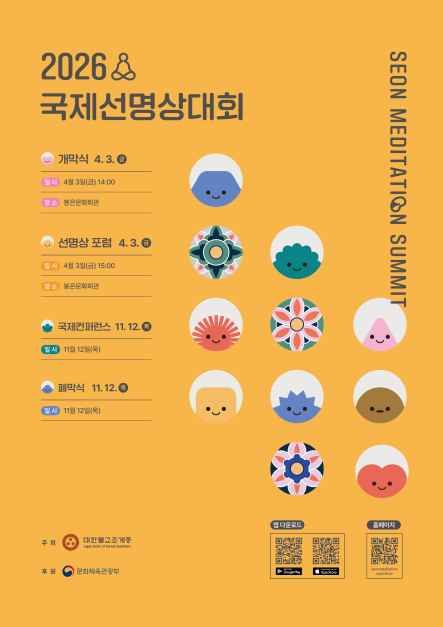
Gangnam-gu·Bongeunsa Temple, Bongeun Cultural Center

Gangnam-gu·Yagi Studio

Gangnam-gu·Gwangya Art Center
![Poster for 2026 National Intangible Heritage Center 12 Workshops Joint Exhibition [Gong-Dream]](/img/c05f88d1fd003e5a-card.webp)
Gangnam-gu·Exhibition Hall "Gyeol", 2nd Floor, National Intangible Heritage Center Educational Building
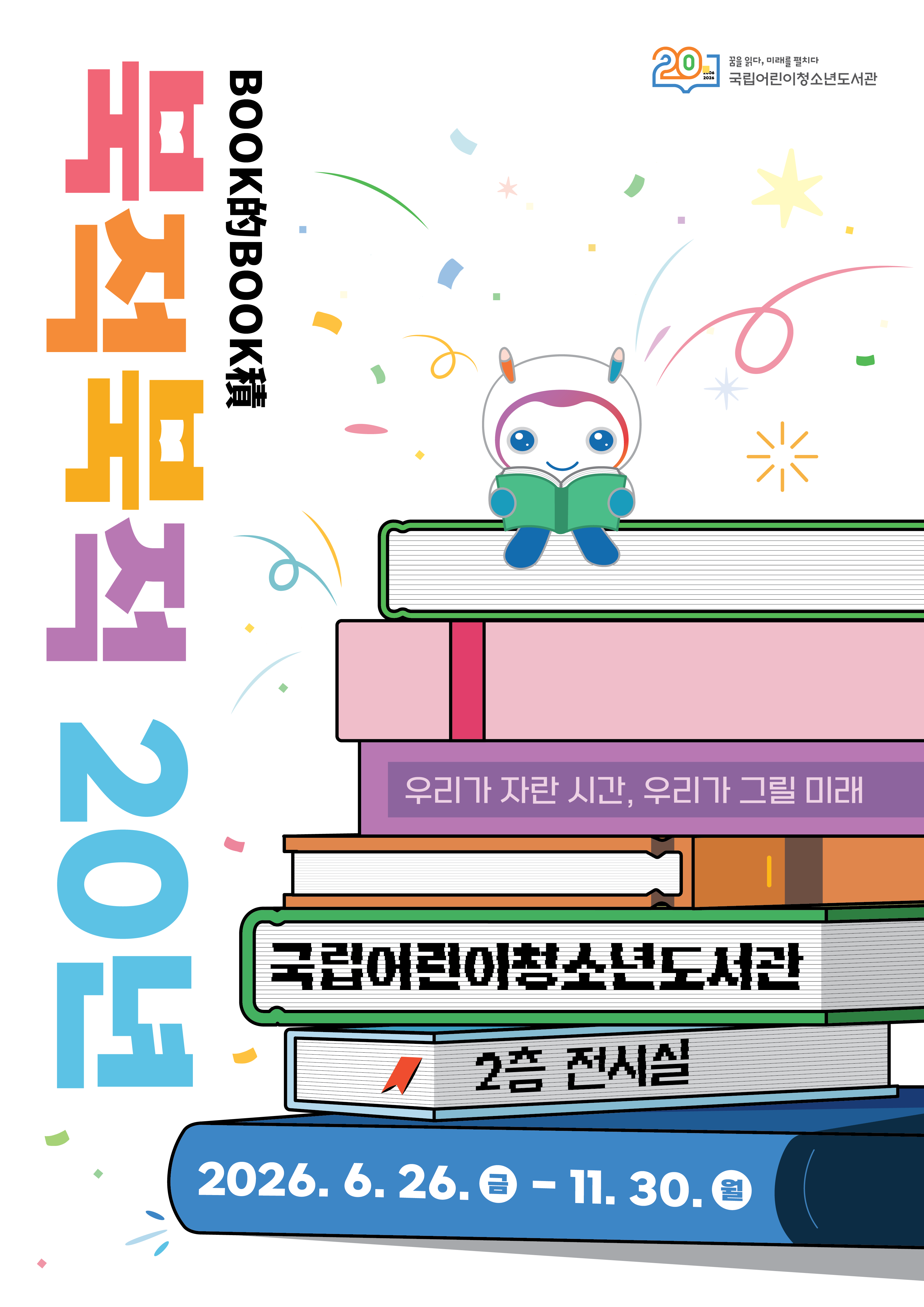
Gangnam-gu·National Library for Children and Young Adults
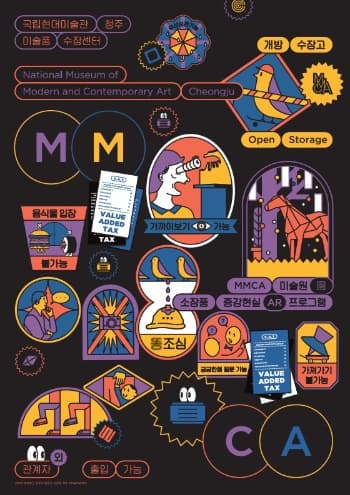
Cheongju-si·National Museum of Modern and Contemporary Art, Cheongju (MMCA Cheongju)

Seoul Grand Park

National Museum of Korea
Yongsan-gu·Ancient Greece and Rome Gallery, Permanent Exhibition Hall, National Museum of Korea (Gungnip Jungang Bangmulgwan)
Haeundae-gu·Busan Museum of Art
Saha-gu·Museum of Contemporary Art Busan

Yeongdeungpo-gu·East Lobby, 1F, 63 Building, Yeouido

Jongno-gu·Jeong Theater (formerly M Theater, formerly Harmony Art Hall)

Jongno-gu·Contents Box (formerly Le Meilleur Theater)
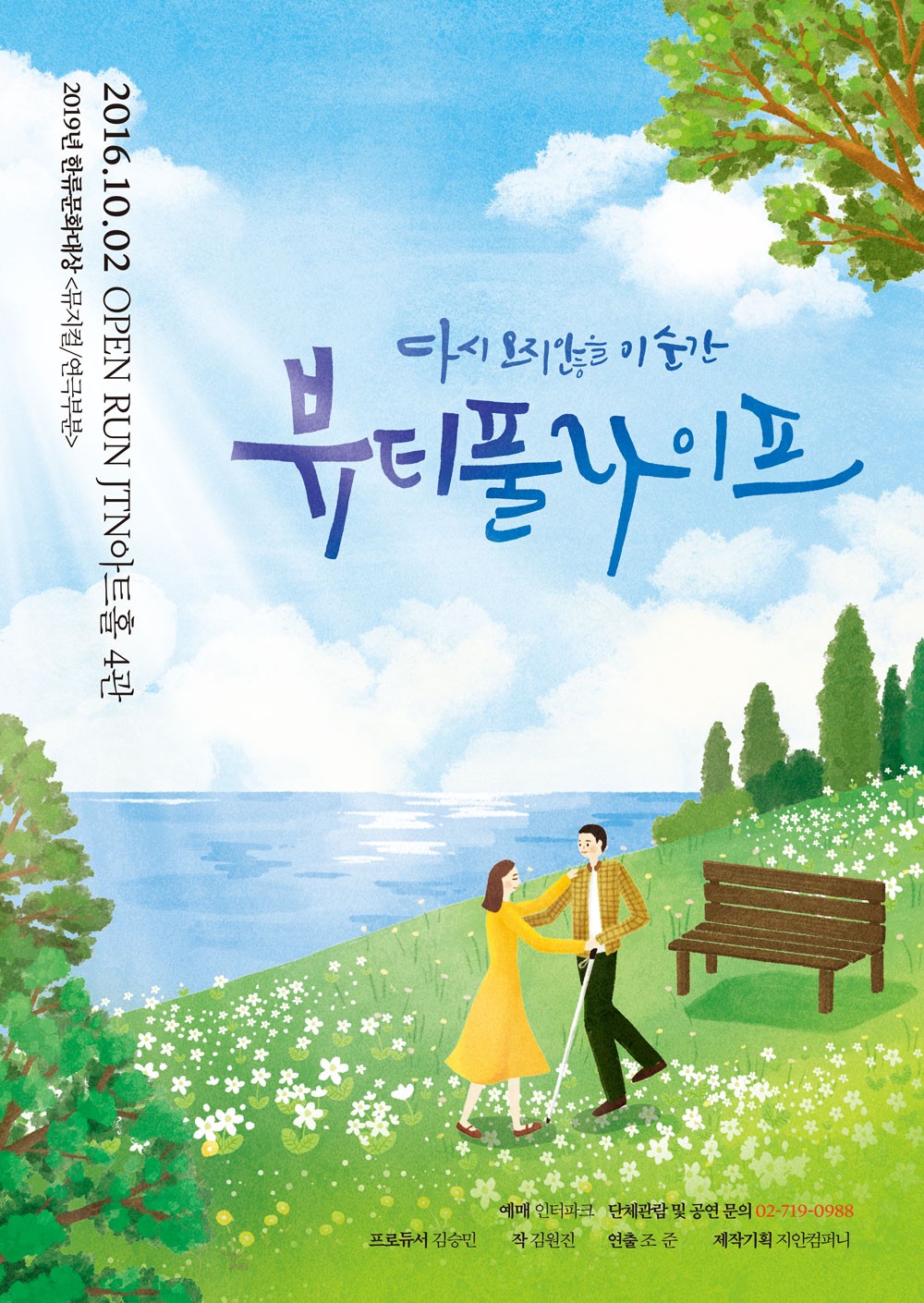
Jongno-gu·JTN Art Hall (formerly Daehangno Arts Madang)

Jongno-gu·Parang Theater (formerly Dohyang Art Hall, formerly Mudis Hall)

Cheongju-si·Soenaegol Small Theater

Jongno-gu·Delicious Theater