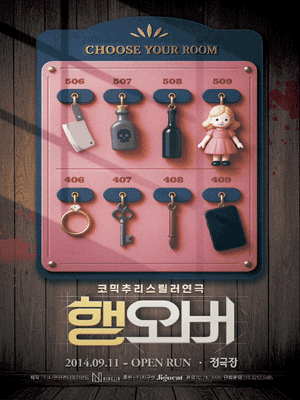
PaidOngoing
Performance
Hangover
Jongno-gu·Jeong Theater (formerly M Theater, formerly Harmony Art Hall)
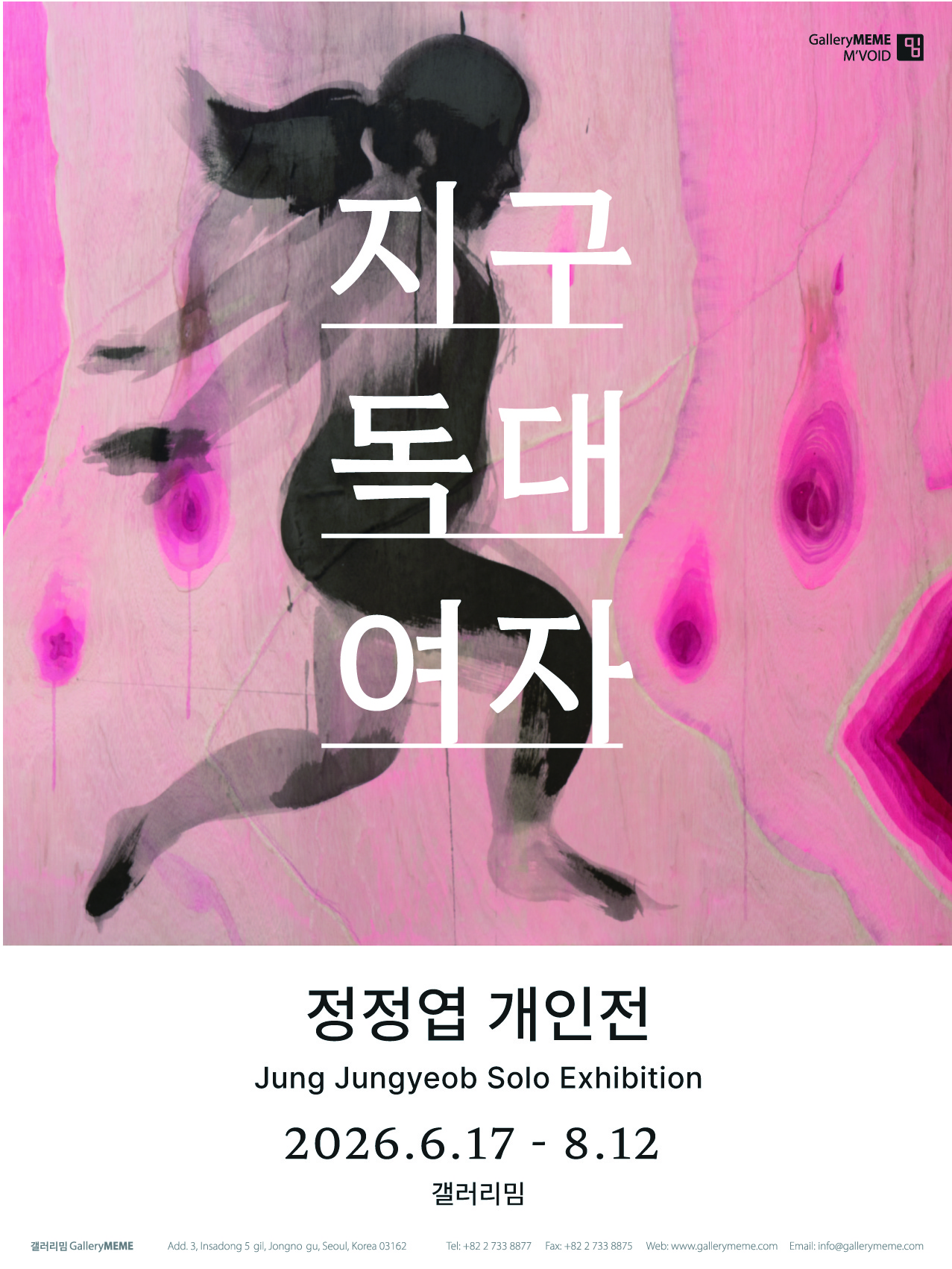
Free · Jongno-gu Gallery Meme
Exhibition Preface Methodology of 'Dokdae' (One-on-One) [1] Lee Yeon-sook (Rita) 'Dokdae' uses the Hanja for 'alone (獨)' and 'answering/confronting (對)'. Literally, it means 'to face alone, without anyone else'. In common usage, it refers to a situation where one privately discusses a specific matter with a superior, a word that presupposes an unequal hierarchy. However, in this exhibition title, Jung Jung-yeob shifts this to a different perspective. I interpret this in my own way: 'dae' is often used to mark a division between two rivals, corresponding to the English 'VS'. At the same time, 'dae' extends to 'against' someone else. As we know, resisting is always a movement toward the opposite direction 'about' someone else. For that, an opponent (相對) in the opposite direction must exist. The same goes for an answer. There is already someone responsible to whom I must return words. Therefore, even if it means 'to face' 'alone', the actual word 'dokdae' always includes a certain unrevealed presence—the 'other'. 'Dokdae' is a confrontation and an answer to an other who is different from me. This, of course, is an event of discord with me. In the two stiffly straight characters of 'dokdae', which consist only of vertical (│) and horizontal (─) strokes, the absolute difference with the other—impossible to reconcile, negotiate, or agree upon—is already exemplified and preserved in its own form. There are intersection points between me and the other, but no parallel lines. A meeting and confrontation of existence and existence without a single step of concession—in feminist language, this is written as 'equality'. Generally, equality means a state of being guaranteed the same rights without discrimination among humans. However, the equality that occurs in a 'dokdae' relationship is accompanied by tension. Because the other is uncomfortable and causes me fear. In fact, feminist politicality and sensitivity are like a kind of perversion ability that transcends the division of species and non/living things, transforming fear of something different from me into respect, wonder—and above all, 'compassion'. A professional feminist subject not only disagrees with but is also indifferent to the way of thinking that automatically translates the 'difference' in power, size, and ability between myself and the object into the language of patriarchal hierarchy. Reaching this level requires constant training. Perhaps that is why many critics read an alternative attitude in Jung Jung-yeob's paintings, different from the authority usually bestowed by the word 'painter'. Indeed, as an insect-woman-painter, Jung Jung-yeob re-enacts the 'dokdae' with them with her whole body, using the wooden panel canvas as a stage, facing the others of various species and legs daily in a 'lonely' yet 'engrossing' way, 'feeling' with 'tactility' through the 'darkness' although 'fearful'. The rough surfaces of the giant moths and giant grasses, scaled up 1:1 to her size, replay the choreography of painting that the artist's body would have performed. The wondrous encounter with the other, where every moment is the 'first' 'primitive' contact, is repeated through the performance of painting. Now painting is another form of 'dokdae'. A relationship with the unrepeatable other is there. Meanwhile, 'dokdae' is also translated into freedom for Jung Jung-yeob. To put it arbitrarily, as a great senior to me, she is an artist who has survived and has never for a single moment given up the tension between art and life—and the fun that such tension makes possible—at the boundary site of the masses (nation/labor)-women ('periphery') over the past years. Through such experiences, with an instinct-like intuition learned through her gut, she considers freedom—and of course, 'equality' as well—to be a state of 'balance' experienced in a flash between extreme opposites, rather than an infinite share. From this perspective, unlike general usage, freedom is a self-discipline and self-care that recognizes one's own limits and tests them. Painting is a concrete practice of this. As a mental space and physical place to practice the 'dokdae' relationship between the other and oneself, the canvas limits the intention of the 'painter' Jung Jung-yeob while simultaneously opening up the coincidences made possible 'from it'. The heterogeneous environment of the wooden panel canvas, each with a different grain, is a perfect matrix for generating the pictorial pleasure acquired only in this state of tension. Disassembling the word 'dokdae' again—'dae' also means agreement to the other's words in modern Chinese. The direction intended by her brush resists (against) the wooden panel and also coincidentally aligns (corrects), producing the sensual fun of physical contact. Enjoying the 'gap' moment that occurs only in the tension between the subject and the world is the fundamental driving force of the 'instinctive' movement of painting. Also, in the words of Slavoj Žižek, this is almost everything we can expect from the concept of freedom, which 'burns fiercely with paradox and discord' [2]. Unlike the solitude that 'dokdae' seems to suggest at first glance, as the painter's attitude and method, there is an abundance of joy and play in the accidental meeting and inevitable contact with the unknown other. From the surface of the canvas that she stroked with her brush and eyes along the wood grain, we discover anew the sixth sense of seeing 'again' with wonder the different species of kin who came out together from the planet Earth that surrounded us since before we were born. This, above all, proposes filling our lives with the tension and wonder given by the difference of the other. In all these processes, what ultimately remains with us is... none other than the fun that life gives! [1] Unless otherwise noted, all direct quotes in this text are taken from Jung Jung-yeob's 'Artist's Note', 'Word Play', and conversations with the artist. [2] Slavoj Žižek, translated by Noh Yoon-ki, "Freedom", Hyeonamsa, 2025, p. 205. Artist's Note (2026.5.15.) Mostly I am an insect. I keep my senses sharp to watch the direction. I grope for what I really want. When an insect crawls powerfully, the first gesture wriggling inside my body When I waved my hand in the cliff-like darkness, I was fearful but full of facing the Earth alone I want to fully breathe the night road I meet every day since birth. The moment I realized I am a woman Where did this fear, this innate anxiety, come from? On the way to the restaurant alone listening to music A single gunshot from afar would blow away this silence. I look into the gestures of a girl's survival story. Painting follows the clear grain of the mind Flinching, stroking, hesitating, groping the floor to find a path that is not there One day, the grains of the wood that I stared at quietly made me move. Groping with brushstrokes, I painted a series of 7 wooden panels of 'Girl's Survival Story-Gesture'. The gesture of a woman dancing in the water creates a story, mixing with water droplets, caves in the darkness, and fern leaves. Bizarre potato sprouts draw huge strokes, boasting their existence. The eyes and wing movements of the moths I met last summer mix with the flow of the wood grain. On a large canvas, the grasses I ate mix with insects, emitting a primitive energy like ancient cave paintings. Stillness and dynamics, enjoying a new breath while walking and shaking. Jung Jungyeob b. 1962 1985 Graduated from Ewha Womans University, College of Fine Arts, Department of Western Painting SOLO Exhibition 2026 Earth-Facing Woman, Gallery Meme, Seoul 2025 Beans Roll Anywhere, Stella Gallery, Seoul 2023 Jung Jung-yeob's Connecting Link, A.P23, Seoul Those Who Have Been Insulted and Are Great, Gallery Meme, Seoul 2022 Exhibition Commemorating the 34th Lee Jung-seob Art Prize, Art Chosun Space, Seoul Asking Labor, Jeon Tae-il Memorial Hall, Seoul Women Like Roads, Dongyangjang B1, Daejeon Handstand Red Beans, Bongsan Cultural Center, Daegu 2021 Walking Moon, White Block Art Center, Heyri Gyeonggi Quiet Commotion, Seoul Botanic Park, Seoul 2019 The First Supper - Exhibition Commemorating the Goam Art Award, House of Lee Ungno, Hongseong Stars Occurring Everywhere, Cho Eun Sook Gallery, Seoul 2018 History of My Studio, Lee Sangwon Museum of Art, Chuncheon 2017 Beans and the Great Candlelight, Trunk Gallery, Seoul Stars Occurring Anywhere, Gallery Nori, Jeju 49 Mirrors, Space Mom Museum of Art, Cheongju 2016 Insect, Gallery Scape, Seoul 2014 Paintings Seeking a Path, Untamed Life, Gildam Seowon, Seoul 2011 Off Bean, Gallery Scape, Seoul 2009 Facial Landscape, Alternative Space Art Forum Rhee, Bucheon Red Bean, Gallery Scape, Seoul 2006 Erased, Arko Art Center, Seoul Extinction, Binari Art Museum, Bonghwa 2002 Jung Jung-yeob Solo Exhibition, Seoho Gallery, Seoul / Seoho Museum of Art, Gyeonggi 2001 Strange Life, The Thickness of That Life, Shinsegae Gallery, Incheon 2000 Floodgate, Insa Art Space, Seoul 1998 Jung Jung-yeob Solo Exhibition, Kumho Museum of Art, Seoul 1995 Housekeeping that Embraces Life, 21st Century Gallery, Seoul GROUP Exhibition (selected) 2025 Alliance of Artists Breathing in Hiding - YP, Jung Jung-yeob, Nook Gallery, Seoul Oh 'Object, Mimesis Art Museum, Paju 2024 The 3rd Two - Asian Women's Art Exhibition, BBK Munich, Germany Speaking Bodies: Asian Women Artists, National Museum of Modern and Contemporary Art, Seoul 2023 Arko Art Center 50th Anniversary 'Where the Wrinkle Passes', Arko Art Center, Seoul 2022 Whose Story, Museum of Contemporary Art Busan 2020 Painting, Gyeonggi Museum of Art, Ansan Savage Dream - Nuclear Dream 4, Art District p, Busan 2019 Awakenings: Art in Society in Asia 1960s-1990s, National Museum of Modern Art Tokyo, National Museum of Modern and Contemporary Art Korea, National Gallery Singapore 2013~2009 OFF THE BEATEN PATH: VIOLENCE, WOMEN AND ART: An International Contemporary Art Exhibition (An International Contemporary Art Exhibition Stenersen Museum, Oslo, Norway | 2009, University Art Gallery, San Diego, USA | 2009) 2012 Women In-Between: Asian Women Artists 1984-2012, Fukuoka Asian Art Museum, Fukuoka, Japan 2008 The Offering Table: Activist Women from Korea, Mills College Art Museum, USA 2002 Gwangju Biennale Project 3, Gwangju Awards 2022 34th Lee Jung-seob Art Prize 2020 Gender Equality Cultural Artist Award 2018 4th Goam Art Award Collections Fukuoka Asian Art Museum, National Museum of Modern and Contemporary Art, Seoul Museum of Art, Arko Art Center, Gwangju Museum of Art, Gyeonggi Museum of Art, Suwon IPARK Museum of Art, Museum of Contemporary Art Busan, etc. Publications "Small, Soft, and Great" Media Bus 2025, "Beans Roll Anywhere" Ireunbi 2025, "History of My Studio" Hexagon 2018, "Korean Contemporary Art Selection Jung Jung-yeob" Hexagon 2011
Jongno-gu Gallery Meme
Get directions on Kakao MapNo reviews yet. Be the first to leave one.
Please write at least 10 characters. Posts containing ads or links are rejected, and posts that breach the content policy may be hidden after being reported.
Jongno-gu·Jeong Theater (formerly M Theater, formerly Harmony Art Hall)
![Poster for Shear Madness [Daehangno]](https://www.kopis.or.kr/upload/pfmPoster/PF_PF241378_260618_130555.gif)
Jongno-gu·Contents Box (formerly Lemaire Theater)
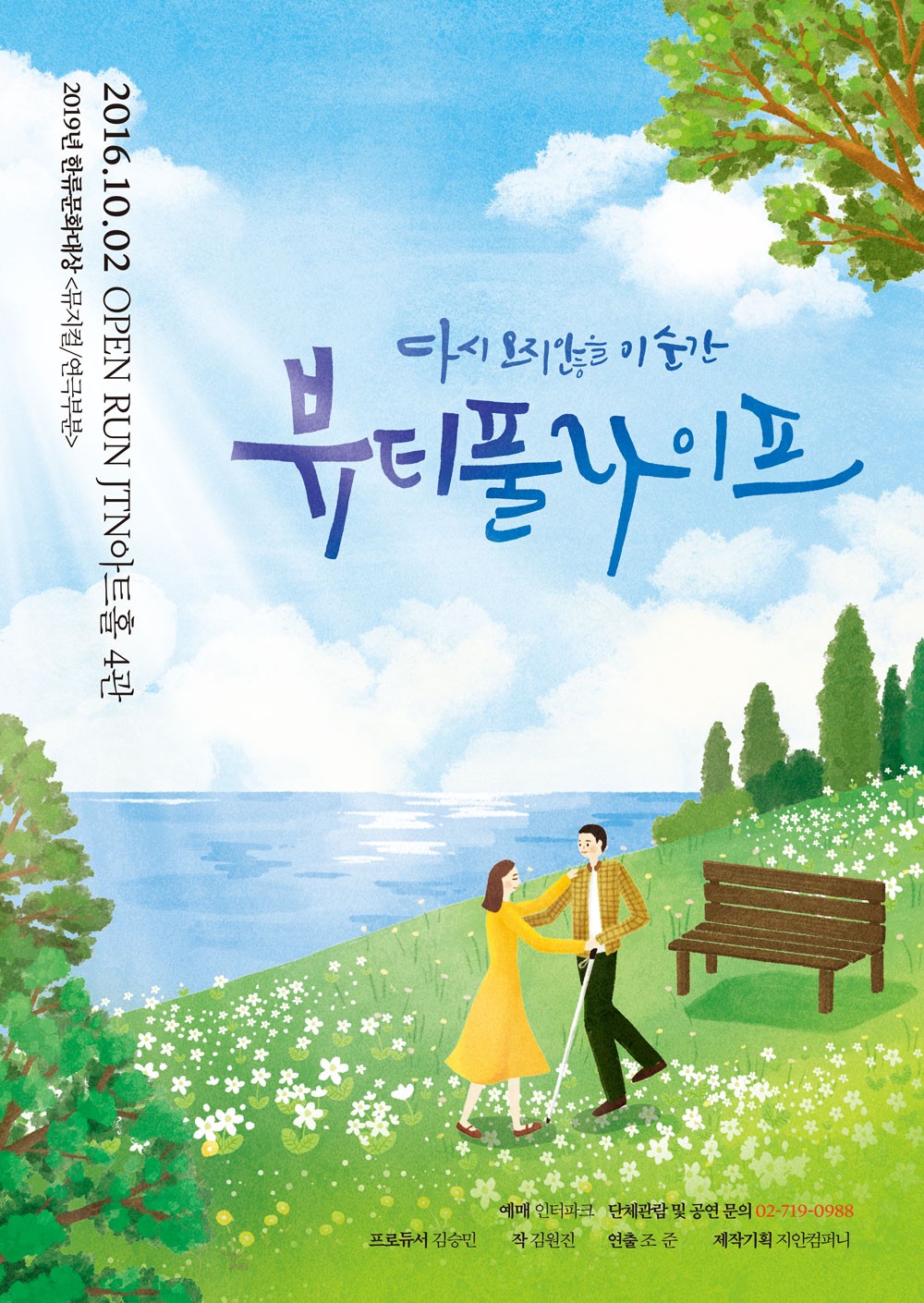
Jongno-gu·JTN Art Hall (formerly Daehangno Arts Madang)

Jongno-gu·Parang Theater (formerly Dohyang Art Hall, formerly Mudis Hall)
![Poster for The Cooking Magician [Daehangno]](https://www.kopis.or.kr/upload/pfmPoster/PF_PF151901_241219_103733.gif)
Jongno-gu·Delicious Theater

Jongno-gu·Polar Bear Small Theater
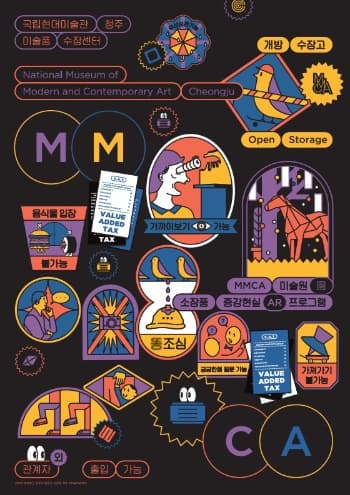
Cheongju-si·National Museum of Modern and Contemporary Art, Cheongju (MMCA Cheongju)

Seoul Grand Park

National Museum of Korea
Yongsan-gu·Ancient Greece and Rome Gallery, Permanent Exhibition Hall, National Museum of Korea (Gungnip Jungang Bangmulgwan)
Saha-gu·Museum of Contemporary Art Busan
Haeundae-gu·Busan Museum of Art

Yeongdeungpo-gu·East Lobby, 1F, 63 Building, Yeouido
Jongno-gu·Jeong Theater (formerly M Theater, formerly Harmony Art Hall)
Jongno-gu·Contents Box (formerly Lemaire Theater)
Jongno-gu·JTN Art Hall (formerly Daehangno Arts Madang)
Jongno-gu·Parang Theater (formerly Dohyang Art Hall, formerly Mudis Hall)
![Poster for Watch Out, Little Red Riding Hood! [Cheongju, Sejong]](https://www.kopis.or.kr/upload/pfmPoster/PF_PF150471_200629_135159.gif)
Cheongju-si·Soenaegol Small Theater
Jongno-gu·Delicious Theater